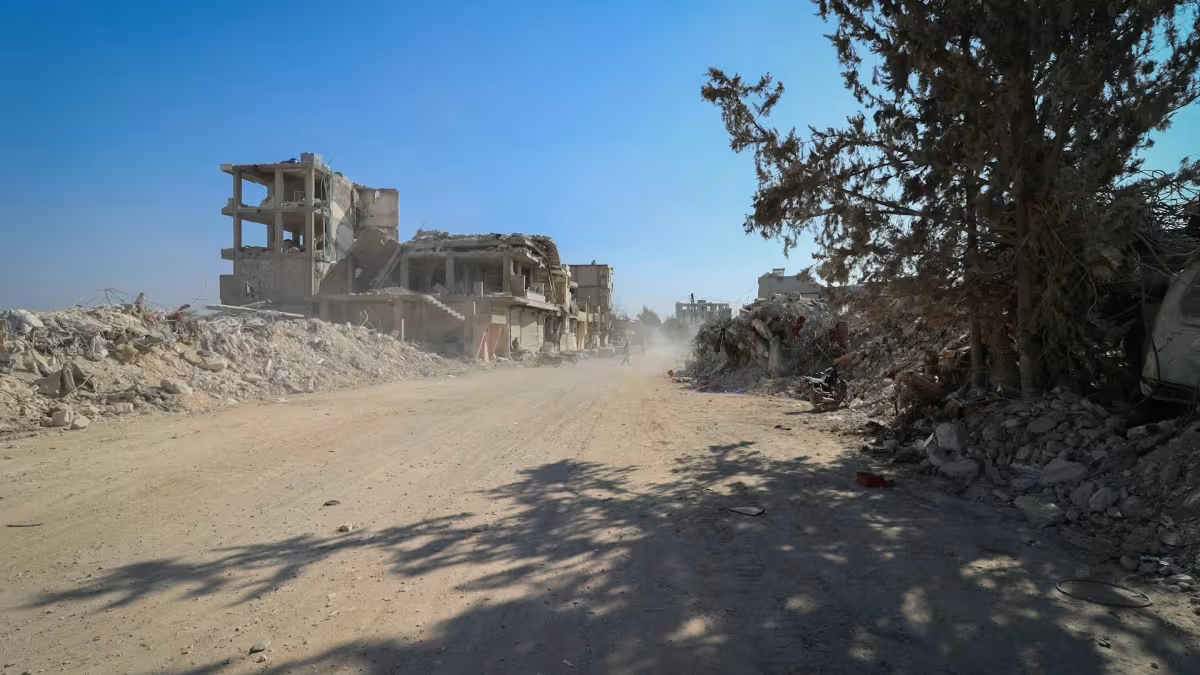
President Trump pulled back from military action against Iran after the country's ballistic missile attack on U.S. bases in Iraq, but the underlying conflict between Washington and Tehran shows no sign of cooling.
The brief confrontation exposed the fragility of the relationship. Trump's threat of retaliation appeared to have a deterrent effect in the immediate aftermath of Iran's strikes, yet experts warn that this momentary restraint masks deeper strategic disputes that remain unresolved.
At the heart of the standoff is competing pressure over the Strait of Hormuz, a critical global shipping chokepoint through which roughly one-fifth of the world's oil passes. Iran has repeatedly threatened to block the waterway in response to U.S. sanctions and military posturing, raising concerns about energy prices and international commerce.
The ideological and geopolitical gulf between the two nations has widened since February, when tensions first escalated sharply. The removal of the immediate threat of U.S. strikes did little to address the core grievances on either side, analysts noted.
Trump's decision to avoid military escalation represented a tactical retreat rather than a diplomatic breakthrough. While neither side appears eager to reignite open conflict, the absence of a negotiated settlement leaves both nations positioned for future clashes.
The standoff underscores the limits of military posturing as a negotiating tool. Without substantive dialogue or concessions, observers say, the fundamental disputes will continue simmering beneath the surface, ready to boil over at the next provocation.
Comments